STATION NOTES / ARRIVE WITH A PLAN
Mountain stations and valley stations
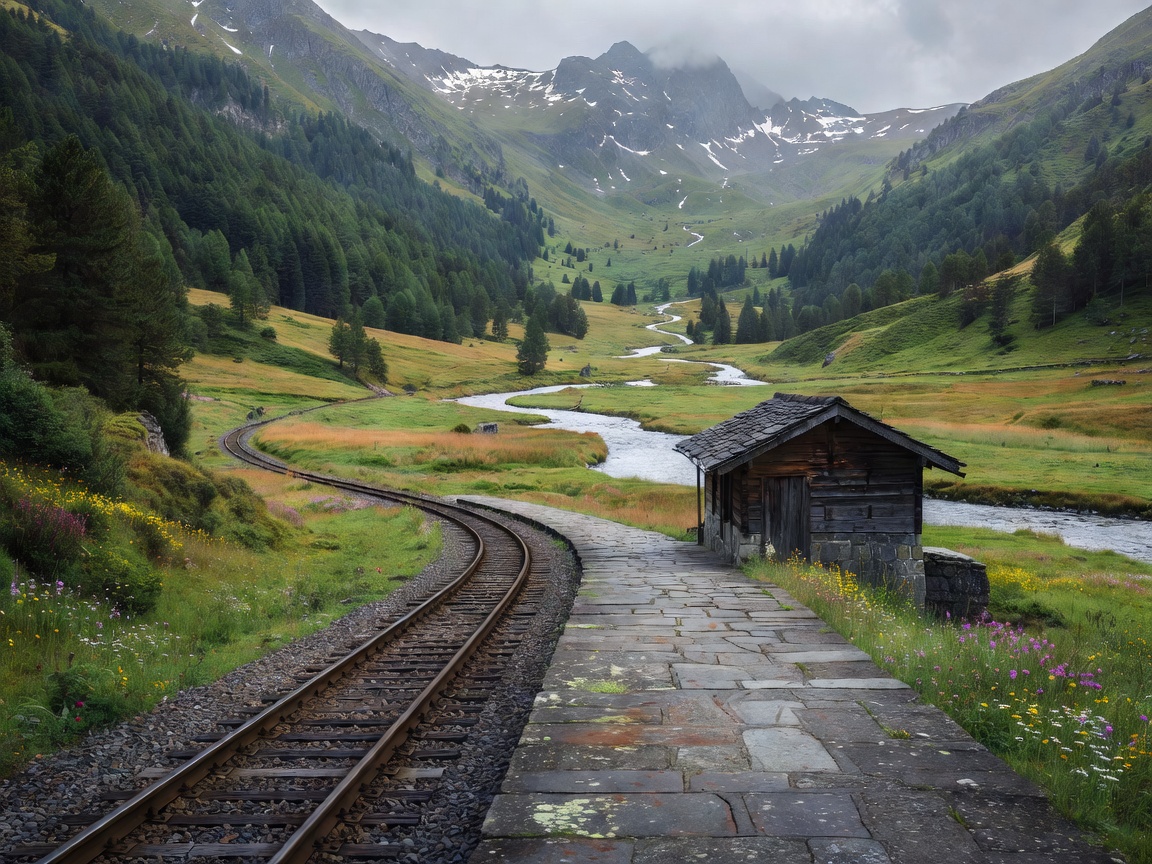
Stations in mountain regions differ in scale, setting and onward access. A valley station may connect with a settlement or another transport route. A higher station may sit in an exposed landscape where weather, elevation and terrain affect how comfortable it is to wait or walk. These are general patterns, not descriptions of a particular station.
Use official station information and a current local map to understand entrances, platforms and connections. Check whether the stop you want is served by the train you plan to take. Some services may pass through or stop selectively. Do not assume that a station name indicates a visitor facility, a staffed desk or a simple walking route.
Separate arrival from access
Getting off the train and reaching a viewpoint are separate parts of a trip. A viewpoint may require a marked path, a local lift or another transport connection, or it may not be accessible from the station at all. Verify the route on an authoritative local source and check whether access is permitted and suitable for your ability and equipment.
Do not rely on a map pin alone. It may not show terrain difficulty, seasonal closures, construction, private land, snow cover or the actual condition of a path. Current local guidance should establish whether a walking link is open and appropriate. If details are unclear, treat the stop as a station visit rather than assuming you can reach a distant feature.
Short stop or longer exploration
A short stopover works best when the activity is close, the next departure is confirmed and the return platform is easy to locate. Keep the plan modest. Allow time to leave the platform safely, orient yourself, take a short look and board without rushing. A tight window is not suitable for an unfamiliar path or an uncertain connection.
A longer exploration stop allows more time for a walk, a meal or a change in elevation. It also requires a more careful check of the next departure, daylight, weather and the route back to the station. In a multi-leg itinerary, a longer stop can be a useful buffer, but only if the station has an appropriate connection pattern on your date.
Weather exposure and elevation
Higher stops can feel colder, windier or more exposed than a sheltered valley platform. Conditions may change quickly. A clear departure point does not guarantee a clear view at the destination. Carry a suitable layer and avoid planning a stop that depends on a narrow weather window unless you have a fallback.
Elevation also affects effort. A route that appears short on a flat map may involve a steep ascent or uneven ground. Check elevation information, terrain, route condition and any local advice. Choose a plan that matches the least experienced person in your group, not only the strongest walker.
Photography without schedule pressure
Allow time to identify safe public viewing areas and to frame a shot without obstructing other passengers. Never cross tracks or enter railway property to reach a photo position. Follow posted signs and staff directions. A platform edge, bridge or trackside area is not a general-purpose viewpoint.
Light and visibility can change during a stop. If photography is a priority, build flexibility into the itinerary rather than sacrificing the return connection. A short, safe station view may be a better choice than an ambitious detour with uncertain access.
Verification checklist
- Confirm the service stops at the station on your date.
- Check the station map, facilities and access information with the railway.
- Verify walking route status, terrain and permissions with local sources.
- Allow time for both the outward walk and return to the platform.
- Check weather exposure and keep a shorter alternative.
Good for
Use this guide when deciding whether a station stop is a quick pause, a longer walk or a destination that needs a separate plan.
What to know
Opening hours, access, paths, facilities and viewpoint conditions change by location and season. This atlas does not publish live site conditions. Verify locally before setting out.